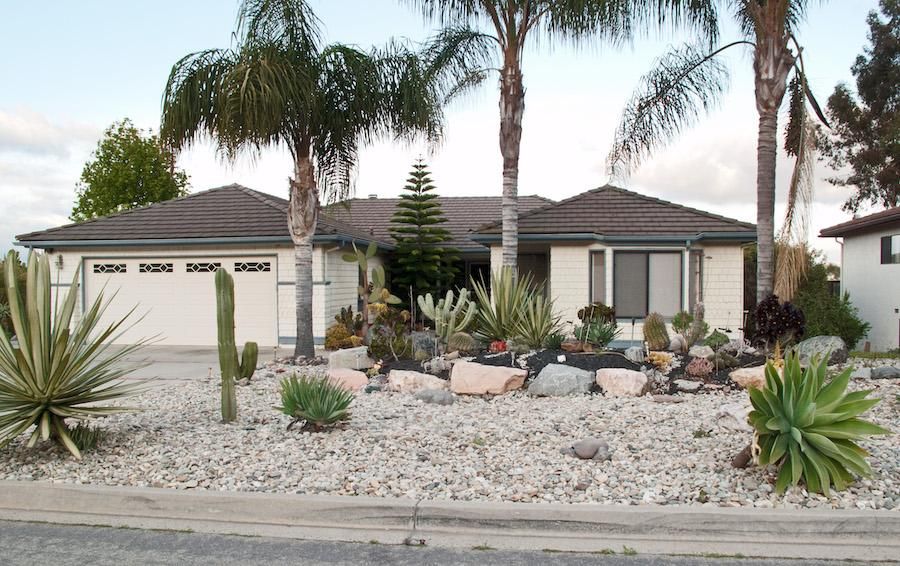
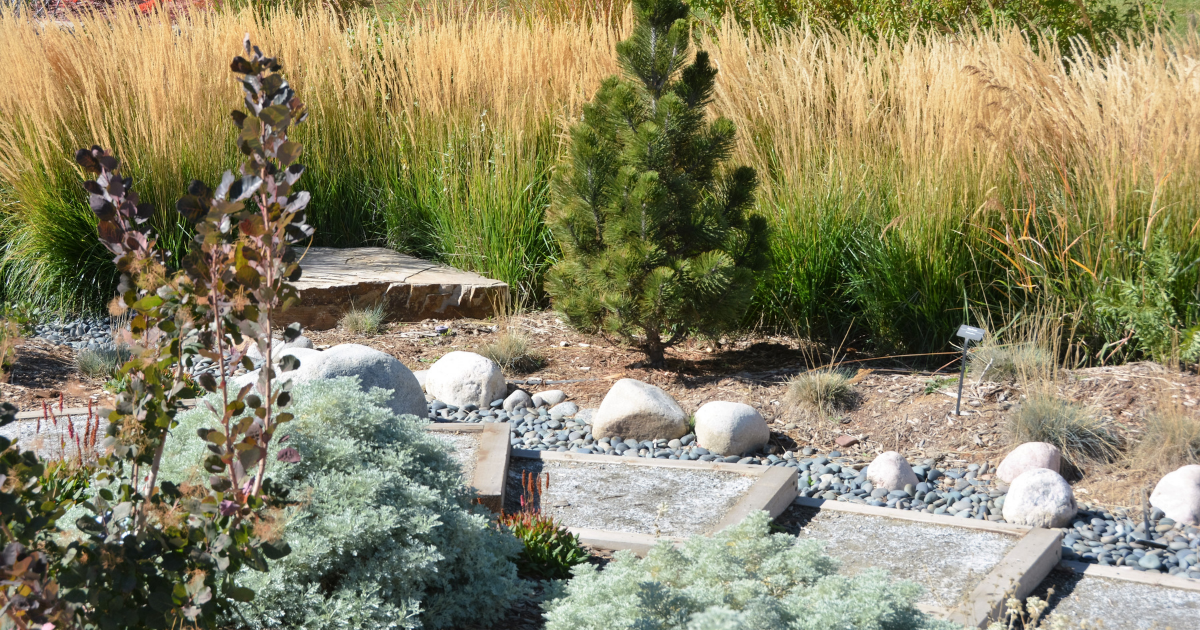
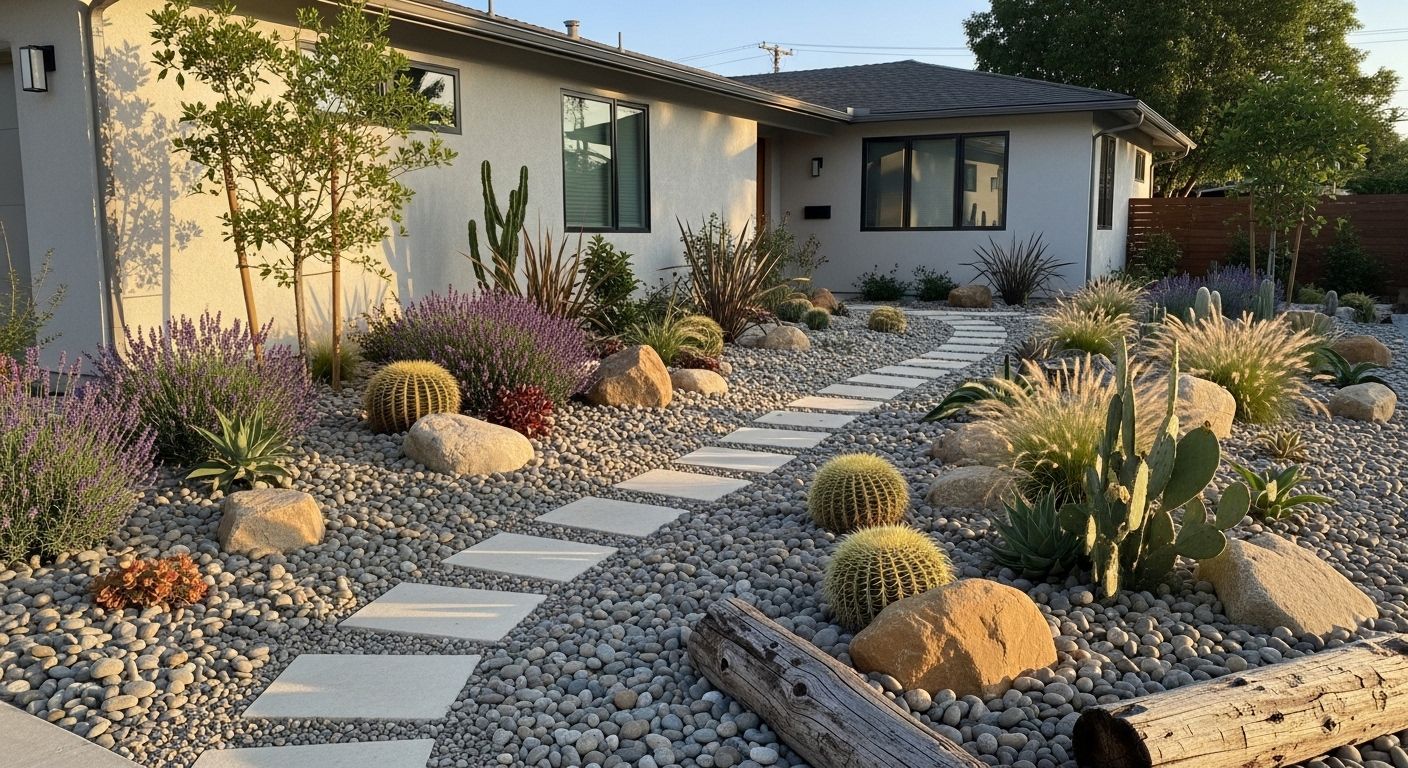
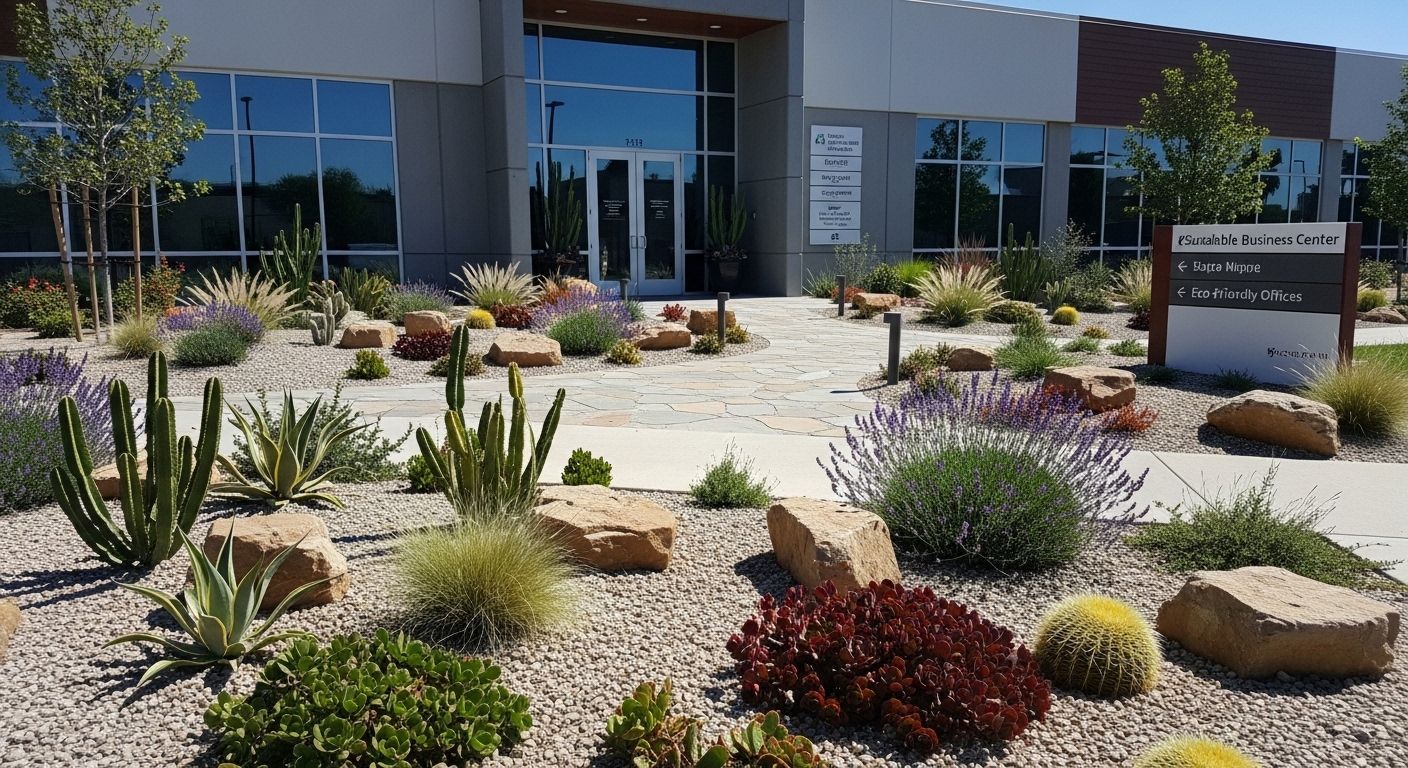
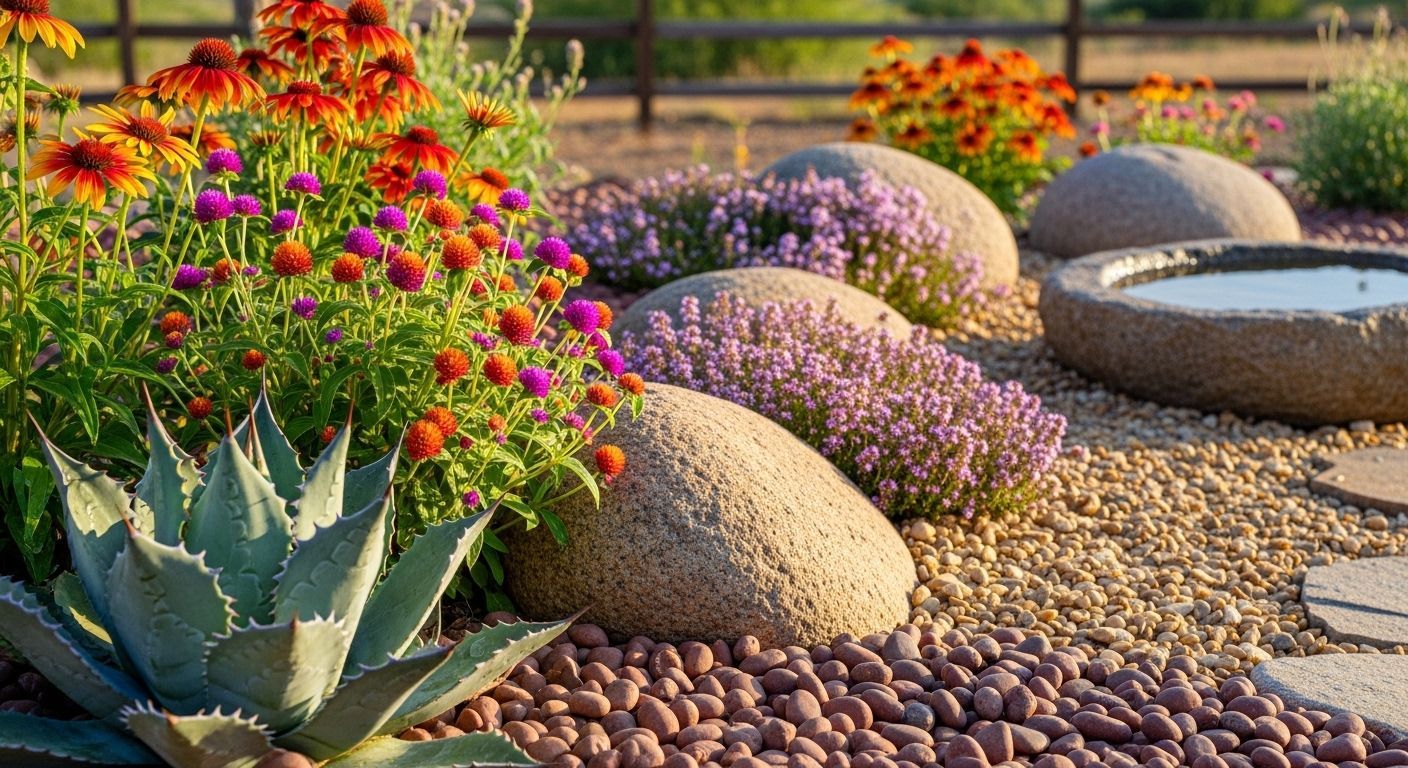
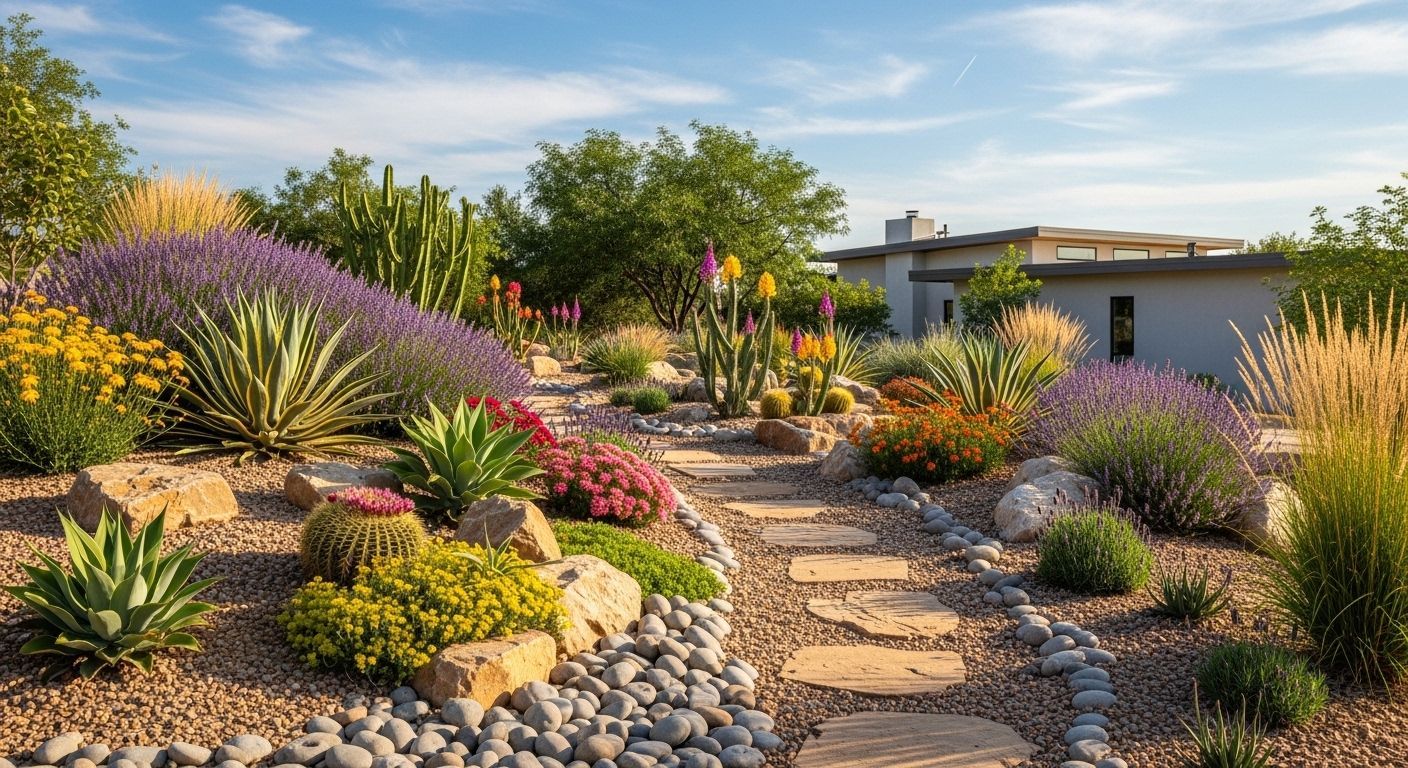
Lush, native plant front yards take a different approach entirely, layering drought-tolerant plants of varying heights and bloom times to create a front yard that shifts character across the seasons. Lavender, sedum, native ferns, and flowering perennials planted in overlapping masses produce color and texture from spring through fall, all while handling Seattle's dry summer stretch with minimal supplemental watering once established.
Hardscaping is essential to a well-designed front yard. Gravel or flagstone pathways from the street to the entry add structure that plantings alone can't provide. Boulder groupings anchor plant beds and add a sense of permanence. Raised beds define planting zones and add dimensional interest, especially useful for working around Seattle's heavy clay soils.
Backyard Xeriscape Design — Livability First
Backyard design is a different conversation, because backyards are where you actually spend time. The goal here is creating a comfortable, functional outdoor space that doesn't depend on a thirsty lawn to feel inviting.
Expanded patio areas in gravel, flagstone, or pavers provide gathering space that turf would otherwise occupy. Raised beds filled with waterwise plants and pollinator-friendly flowers surround the hardscape with living color and movement without adding to your irrigation load. A xeriscape garden built around native grasses and drought-tolerant perennials creates genuine seasonal interest, attracting pollinators throughout the warmer months while staying low-maintenance year round.
According to Seattle Public Utilities, outdoor watering can represent a meaningful share of residential water use during peak summer months, and homeowners who convert lawn space to drought-tolerant planting see a measurable drop in that seasonal spike. The Washington State Department of Ecology has reported that summer water demand across the region continues rising, making backyard ideas centered around low-water design increasingly practical rather than purely aesthetic.